Our capabilities
Built to improve safety, efficiency, and crew confidence





What is the HiNAS product family?
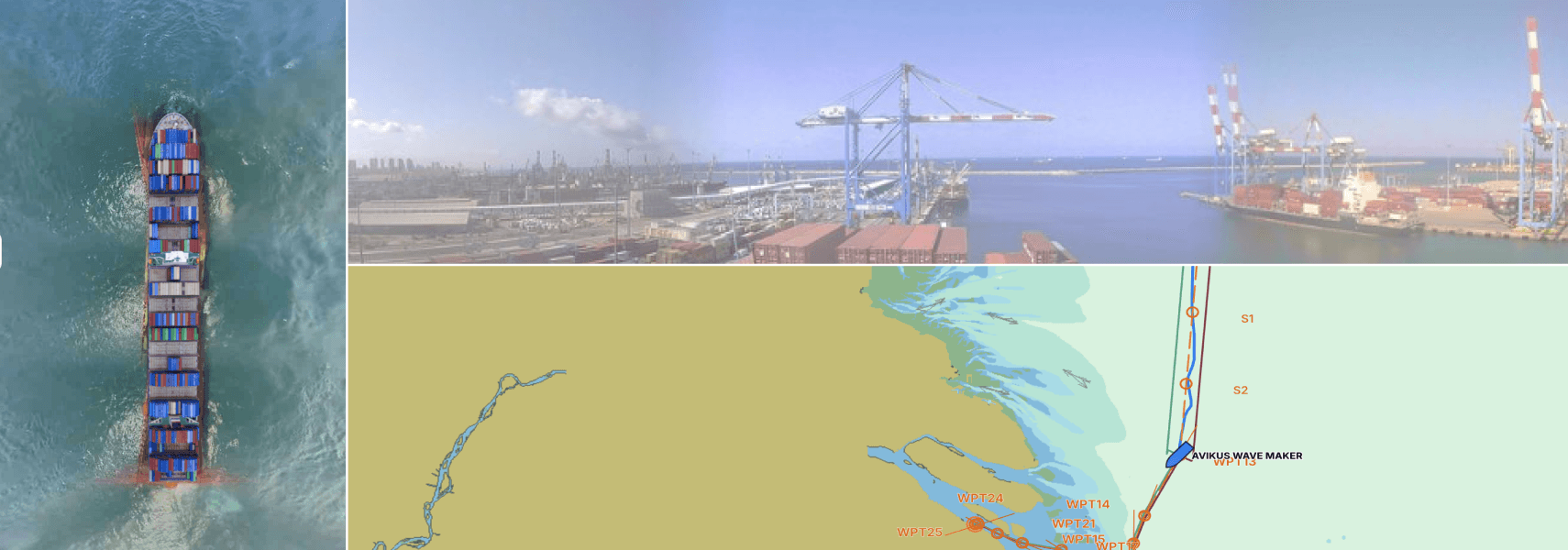
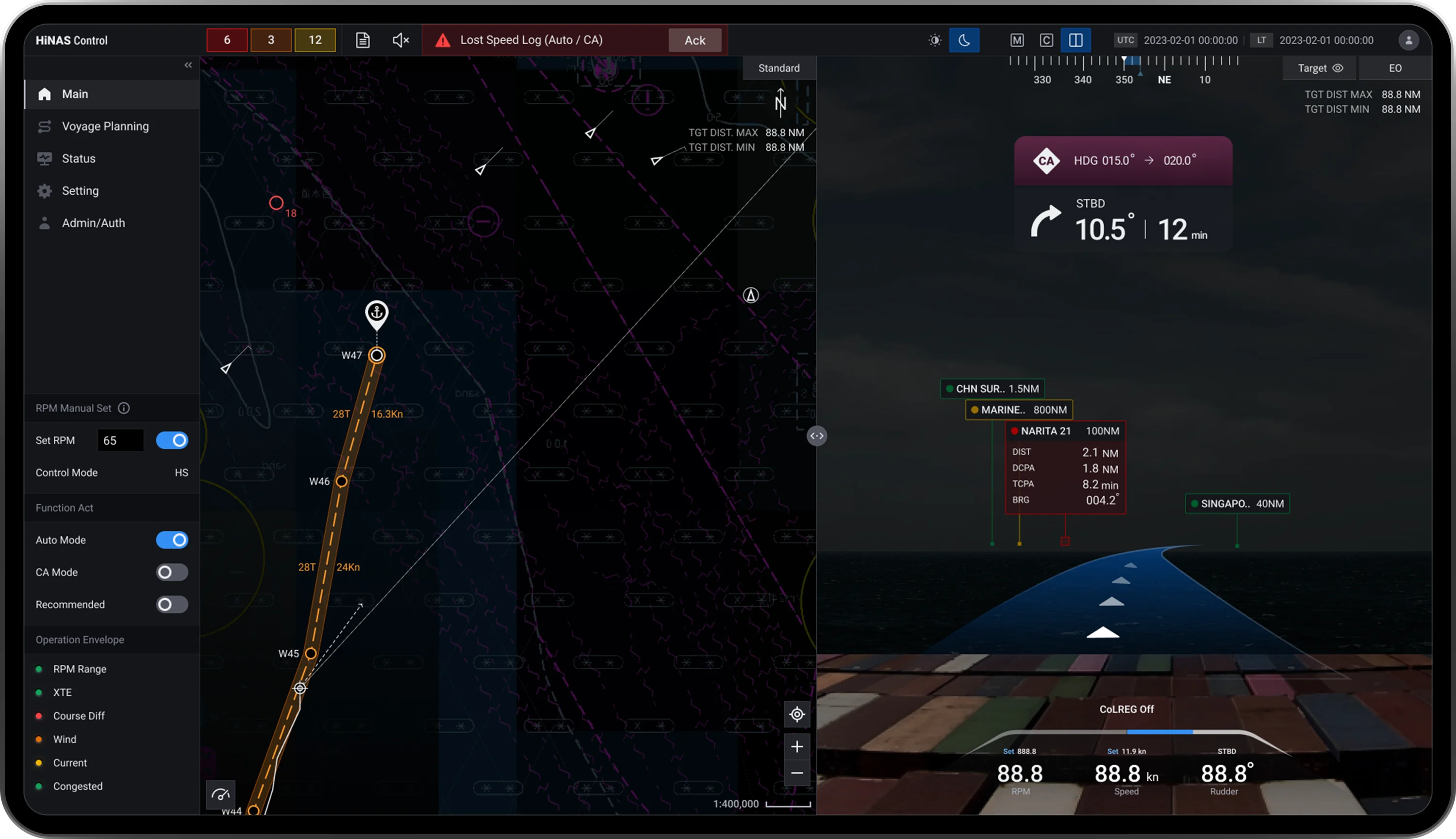
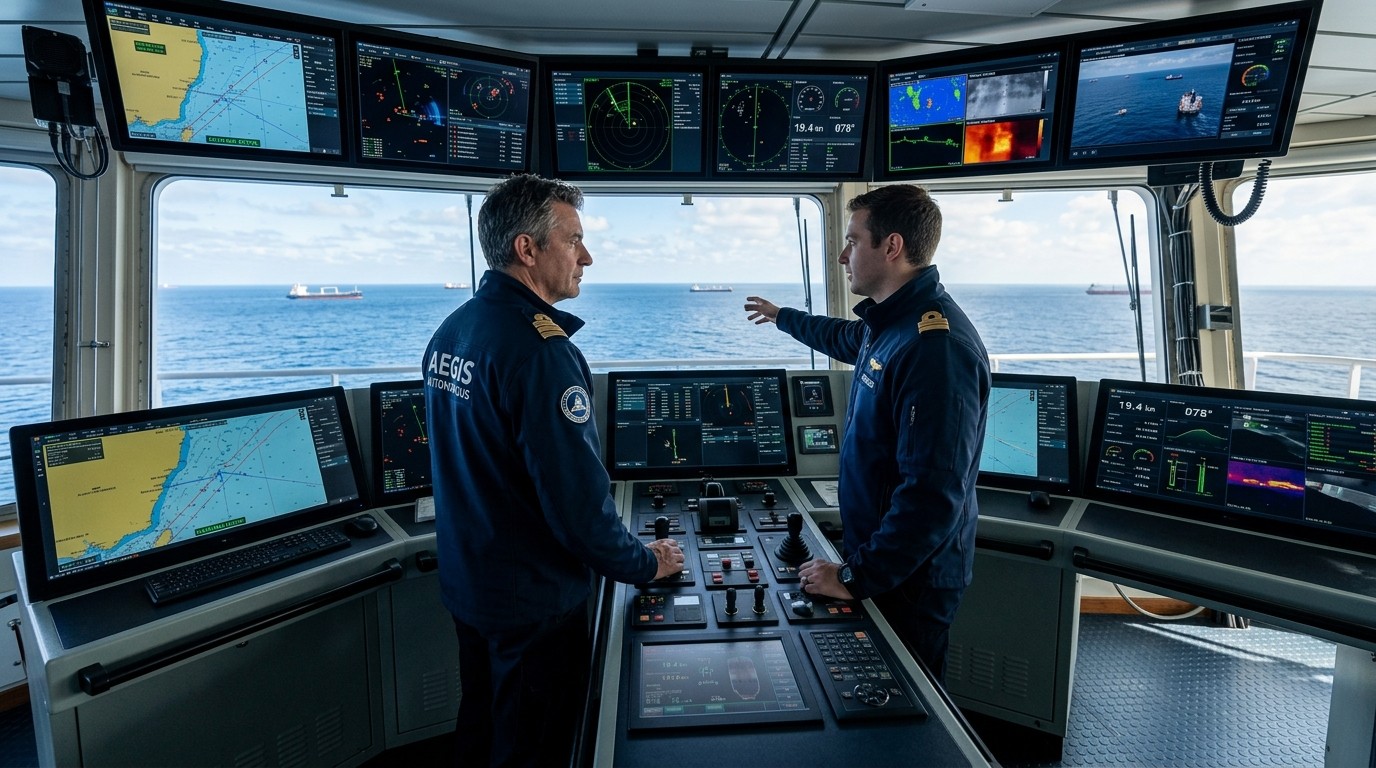
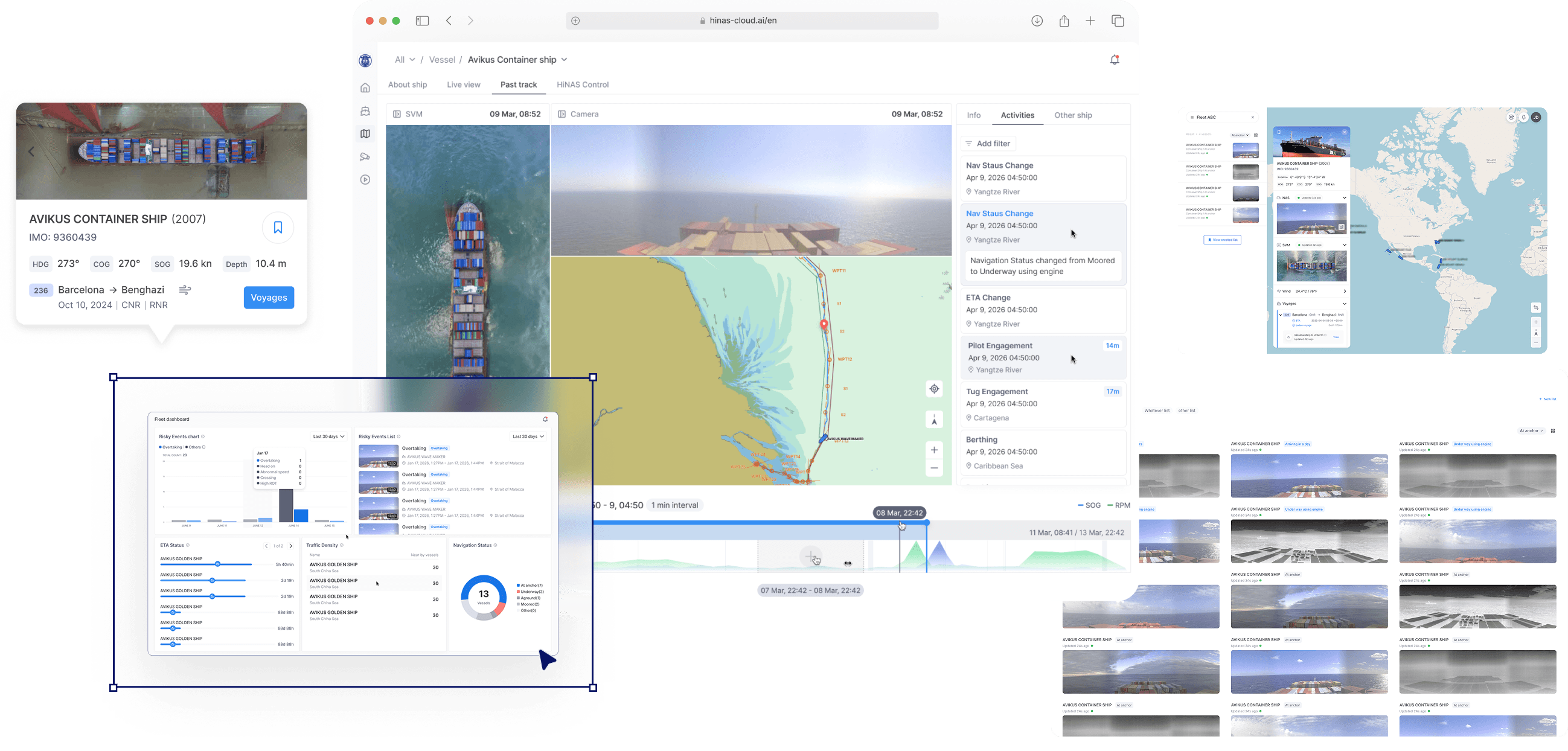
The HiNAS (Hyundai intelligent Navigation Assistant System) family offers a suite of advanced, AI-powered maritime solutions designed to improve safety and efficiency. The main products include: HiNAS Navigation: Enhances situational awareness by providing a sensor-fused Augmented Reality (AR) view to help crews detect obstacles easily HiNAS Control: A Level 2 autonomous navigation system that automatically controls the ship's heading and RPM to follow routes, avoid collisions, and optimize fuel usage HiNAS SVM (Surround View Monitoring): Provides a 360-degree bird's-eye view around the vessel to ensure safer berthing operations HiNAS Cloud: A centralized fleet management and analytics platform that provides real-time remote monitoring and incident playback to streamline fleet operations and enhance overall safety
Will this system replace the ship's captain or crew?
No, HiNAS is designed as an assistive system, not a replacement for human operators. It operates at Level 2 autonomy, meaning it automates routine tasks to reduce crew workload and minimize human error. However, a certified officer must maintain a safe navigational watch at all times, and the captain always retains the final decision-making authority and can take manual control instantly
How does the system save fuel and reduce carbon emissions?
HiNAS Control features an AI-driven "RPM Optimizer." Instead of sailing at a fixed speed, the system continuously analyzes real-time data—including weather forecasts, ocean currents, the ship's draft, and the scheduled arrival time—to calculate and execute the most fuel-efficient engine RPM. This dynamic adjustment has been proven to reduce fuel consumption by 3% to 8% (pilot tests averaging at 4.2%), which directly lowers operational costs and CO2 emissions.
Can these systems be installed on existing ships, or only on new builds?
HiNAS Navigation and HiNAS Control are designed for easy retrofitting on existing vessels. The installation typically takes about three days and can be completed at any port without the need for dry-docking. However, the HiNAS SVM (Surround View Monitoring) system requires multiple cameras installed along the ship's hull, so it is exclusively available for newbuilding projects (12 months before delivery) or during scheduled dry-docking periods.
How reliable is the system at night or in bad weather?
The system is highly reliable because it uses "Sensor Fusion" technology. Rather than relying on a single data source, it intelligently combines information from the ship's Radar and AIS with Avikus's advanced camera systems. The camera unit includes both Electro-Optical (EO) cameras for daylight and Infrared (IR) thermal cameras that maintain clear visibility and detect targets even in low-light conditions, darkness, or fog. If weather conditions become too severe for the sensors, the system will safely alert the crew and return manual control to the operators.